Showing posts with label real estate industry. Show all posts

Tuesday, August 7, 2018

Commercial Real Estate - Evolving Office Spaces Part 1

RECBL - Cash Buyer's Lists
Commercial Real Estate - Evolving Office Spaces Part 1

You’re walking along the downtown strip and come across a quaint storefront with large glass windows looking into an agent-occupied office space. From the outside, you can peruse the various listings marketed by the brokerage, and once you enter, you’ll engage with one of the many agents waiting to help you buy or sell your home.

If you think back to more recent memories, however, you’ll realize that this model is swiftly becoming a part of the past. Today, traditional real estate offices are being replaced with variations that embrace technology, as buyers are largely beginning their search online before engaging an agent.

HomeSmart International, for example, has structured the brokerage so agents can choose the more traditional route or a virtual space in which all of its technological systems are still easily accessible.

“A business model that combines the best of the online world with the physical world means the agents get a true win-win,” says Wendy Forsythe, chief operating officer at HomeSmart International. “They don’t have to choose an office location or virtual; they can have both, and this gives them ultimate flexibility in their business.”

The NextHome franchise also embraces a hybrid model to introduce more elasticity in an industry in which not all agents have the same needs.

“I see more and more of our NextHome franchise owners and brokers working in a hybrid-type office,” says Imran Poladi, vice president of Business Development at NextHome. “Gone are the days of having a monster-sized building to accommodate a huge agent count. Today’s REALTOR® wants a professional place for meeting clients but doesn’t necessarily have the need to come into the office every day. With technology being so advanced, it makes sense to have a great work environment for collaboration with colleagues, but the flexibility to work from anywhere.”

Meanwhile, at Mel Foster Co., a member of Leading Real Estate Companies of the World®, physical locations are embraced; however, technology remains at the forefront of the office environment.

“We have multiple traditional brick-and-mortar offices and two boutique-style offices—smaller, more collaborative spaces that support agents’ desire to work in a more mobile environment,” says Lynsey Engels, president of Mel Foster Co. “These meet client needs more quickly with the technology that makes buying and selling more convenient for those clients.”

Other brokerages lean heavily toward a tech-centered office space. eXp Realty, for example, does not have brick-and-mortar locations, and instead provides an immersive virtual experience through its cloud campus, eXp World.

“eXp Realty’s cloud campus environment allows agents to meet and learn together, no matter where they might be located,” says Mitch Robinson, senior vice president of Marketing and Communications at eXp Realty. “They can jump in a meeting or learn on-the-go with eXp Realty agents located everywhere. They also gain instant, live support from eXp Realty’s agent services, technology and accounting teams.

“eXp Realty cuts overhead brick-and-mortar costs by offering agents a cloud campus environment,” Robinson says. “This means we can invest in agent support and technology instead of expensive leases.”

Josh Harley, who founded Fathom Realty in the Dallas-Fort Worth, Texas, market in 2010, has committed to a cloud-based model since day one in order to lower overhead costs, reflecting the savings through an attractive commissions structure that doesn’t sacrifice technology, training or support. While some physical locations are necessary in order to meet certain state restrictions, cutting back on concrete spaces has proved fruitful, according to Harley.

“Unfortunately, not every state allows a brokerage to completely forego brick-and-mortar offices, but that doesn’t mean those spaces have to be large enough to house all of your agents,” Harley says. “Having brick-and-mortar locations is costly and eats up a huge percentage of a brokerage’s revenue and profitability. By eliminating this unnecessary cost, where possible, we are able to keep our expenses low and pass those savings onto our agents in the form of low or no fees and awesome commission splits.”

How do these varying office strategies impact the industry’s agents, and the buyers and sellers they serve? Since each company adopts a unique model, the agent and consumer experience can be vastly different between brokerages.


​​​Jason Grace is AZ Social Realty's content editor. Email him your real estate news ideas at jason@cashbuyerslists.com.


CashBuyersLists.com                          Please like, comment and share. Thank you.

Monday, July 30, 2018

FREE HOUSES - INSANE THINGS PEOPLE WILL DO OR WON'T DO FOR A FREE HOME

RECBL - Cash Buyer's Lists
FREE HOUSES - INSANE THINGS PEOPLE WILL DO OR WON'T DO FOR A FREE HOME

From fast food only to zero communication, most would give up plenty for a free dream home.

Unlike buying a car or paying for a vacation, home buying is clearly an emotion-fraught enterprise.​ There's always a catch.

​For instance, someone offers you your dream home — whether it's a villa in Tuscany or a Palm Springs mid-century ranch — at zero financial cost to you.

But you'd have to give up a beloved pet, or turn down a fantastic job. Or cheer for the Cleveland Browns, who didn't win a single game in 2017.

Here's what people will and won't do for that opportunity, according to a survey from United Wholesale Mortgage. To get an idea of how much Americans value the idea of a dream home, the residential lender surveyed 1,002 homeowners and non-homeowners online in June.

Continue reading >


CashBuyersLists.com                    Please like, comment and share. Thank you.

Saturday, July 28, 2018

REAL ESTATE: WHAT BUYERS SHOULD KNOW ABOUT SELLERS

RECBL - Cash Buyers Lists
REAL ESTATE: WHAT BUYERS SHOULD KNOW ABOUT SELLERS


The following information is provided by the Center for REALTOR® Development (CRD).

NAR has been administering its annual Profile of Home Buyers and Sellers survey since 1981. The survey has grown from 59 to 131 questions, and gives us great insight into the trends, wants and needs associated with the most significant financial decision of most people’s lives: purchasing a primary residence for themselves and their families.

In this article, we’re going to dig in a little deeper into the findings from the 2018 version of the survey to focus on sellers:

Sellers Are Staying in Their Homes Longer
In the last 30 years, sellers have remained in the same home for longer periods of time. From 1987-2008, sellers stayed in their homes for a median of six years, with the only exception being 1997, when the median tenure bumped up to seven years. After 2008, the median tenure began to increase by one year each year.

By 2011, the median tenure reached nine years, where it remained for three consecutive years, and jumped up again in 2014 to 10 years. It decreased to nine years in 2015, but rose in 2016 to a median of 10 years, where it remained in 2017, effectively doubling since data collection started three decades prior.

It’s not necessarily clear why sellers are staying in their homes longer, but one possibility for some is that they are waiting for their equity to increase, especially given the economic downturn.

Seller Relationships With Agents Are Steady and Strong
Eighty-nine percent of home sellers worked with a real estate agent to sell their home. In addition—same as last year—90 percent of sellers listed their homes on the Multiple Listing Service (MLS), which is the No. 1 source for sellers to list their homes. Only 4 percent opted not to list on an MLS.

Client referrals and repeat business are the predominant ways sellers find their real estate agent. Most sellers—85 percent—said that they would definitely (67 percent) or probably (18 percent) recommend their agent for future services.

Sixty-two percent of sellers were “very satisfied” with the selling process; 26 percent were somewhat satisfied. Only 13 percent were dissatisfied with the process.

Key Skills Sellers Want in Their Agents
Sellers place high priority on the following five tasks: market the home to potential buyers (21 percent); sell the home within a specific timeframe (20 percent); price the home competitively (18 percent); find a buyer for home (15 percent); and help fix the home to sell better (15 percent).

The reputation of the real estate agent was by far the most important factor when sellers selected an agent to sell their home (34 percent). Sellers also place value on the agent’s trustworthiness and honesty (18 percent) and whether the agent is a friend or family member (16 percent).

FSBOs Are Decreasing
In 1981, FSBO home sales accounted for 15 percent of all sales, and agent-assisted sales accounted for 85 percent. FSBO sales have declined over time, and in 2017, FSBOs accounted for 8 percent of total home sales again for the third year in a row. This is the lowest share since data collection began.

FSBOs typically sell for less than the selling price of other homes. For FSBO sellers, those who know the buyer tend to have higher median household incomes compared to those who did not know the buyer. Where FSBO sellers knew the buyer, the time on market for the home was usually a week, and sellers received 100 percent of the asking price.

To learn much more about sellers and seller representation overall, please consider checking out the education, benefits, and resources offered by CRD and its SRS Designation. In July, the featured 25% OFF course at the Center for REALTOR® Development is the Seller Representative Specialist (SRS) Designation Course, which is the basic requirement toward obtaining this credential.

For more information about other courses and programs, please visit the online learning portal from NAR’s Center for REALTOR® Development (CRD) and the Learning Library. Here, real estate professionals can sign up for online professional development courses, industry designations, certifications, CE credits, Code of Ethics programs and more. NAR’s CRD also offers monthly specials and important education updates. New users will need to register for an account.


Jason Grace is AZ Social Realty's content editor. Email him your real estate news ideas at jason@cashbuyerslists.com.


CashBuyersLists.com Please like, comment and share. Thank you.

Real Estate Industry and the New Normal

RECBL - Cash Buyers Lists
Real Estate Industry and the "New Normal"


This month’s National Association of REALTORS® (NAR) Power Broker Roundtable discusses the evolution of the industry’s “new normal.”

 MODERATOR: ​​​Christina Pappas, District Sales Manager, The Keyes Company, Miami, Fla.; Liaison for Large Firms & Industry Relations, NAR

 PANELIST: Sherry Chris, CEO, Better Homes and Gardens Real Estate, Madison, N.J.

 PANELIST: Joan Docktor, President, Berkshire Hathaway Home Services Fox & Roach, REALTORS®, Devon, Pa.

 PANELIST: Long Doan, CEO, Co-Founder, Realty Group MN, Coon Rapids, Minn.

________________________________________________________________________________________


Christina Pappas: Everything old is new again. The saying comes from the lyrics of a Peter Allen song originated nearly 40 years ago, but the words were never truer than they are today, especially in the real estate industry, which has changed and reinvented itself over and over since the term “REALTOR®” was first coined way back in 1916.

So what exactly is traditional real estate? Is it relevant in today’s world? What do we mean by “the new normal”—and where is the industry heading? For answers—and some very well-informed interpretations—we’ll be speaking with three industry leaders who are positioned on the forefront of change. Sherry, you’ve been a real estate innovator through several cycles of change. What do you see as today’s new normal?

Sherry Chris: Well, I can’t go back to 1916, but I have been around long enough to see how the industry has turned upside down with the advent of modern technology. In the early days of technology application, consumers would search our websites on their own and perhaps eventually call an agent. Today, we can give our agents the edge through the use of predictive modeling. We can use Smart Bots. We can match up artificial intelligence (AI) with a treasure trove of deep, rich data to determine the habits and patterns of potential buyers and sellers, so that the agent can be the first to reach out with exactly what that consumer is looking for. That’s the direction we are taking, and we’re investing heavily in the effort. But to speak to your “everything old is new again” reference, Christina, the truth is that regardless of the impact technology is making, the agent was, is, and should be the trusted advisor at the center of every transaction.

Joan Docktor: I agree. Today’s new normal combines the best of traditional real estate—that is, building relationships and giving every consumer the best possible buying or selling experience—with everything that technology can offer to accommodate and advance those goals. We are using AI to make our agent CRMs smarter—to give our agents more and better information and to keep them front and center with consumers. We’re also in the process of developing Chat Bots, or Smart Bots, to reside online and answer consumer questions 24/7—and, more important, to connect online searchers with knowledgeable, live agents.

Long Doan: Of course, technology has dramatically changed the way real estate is practiced today, but that’s only one piece of the puzzle. In my new normal, keeping the agent front and center means more than providing tools; it means creating an environment where the broker works for the agent, and not the other way around. Our goal is to provide a business platform that includes technology, as well as marketing support and coaching, to help every agent become the CEO of his or her own business—and we are turning the traditional commission structure on its ear with a 100 percent commission and a flat fee. In my view, that’s the way to produce dedicated and competitive agents who perform at peak levels.

CP: There’s another way the industry is changing, and it has to do with physical footprint, both in terms of space and layout. Shrinking office space was a natural byproduct of the last industry slowdown, but what may have begun as an economic need is giving us a new-normal benefit. In our offices, for example, cubicles are becoming a thing of the past in favor of open spaces—almost like a Starbucks atmosphere—that are flexible and that definitely create a more congenial business setting.

LD: I think that back when cell phones went viral, and everybody became mobile, many agents seemed to want to skip the office in favor of working from home. But now, agents are coming back because they miss that interaction. Part of my approach is making the office environment so valuable, so compelling in terms of support, sharing and mentoring, that agents want to be there whenever they’re not out selling real estate.

JD: That’s a good thing, because real estate is first and foremost a people business, both in terms of office culture and in building client relationships. But as more business is transacted online, the new normal also means we need to be more focused than ever on security. Hackers become more wily every day, and many consumers don’t realize just how vulnerable they are. As brokers, we need to have two-step email authentications and other online security measures in place to help keep consumer information and all our data as safe and secure as possible.

SC: And yet all of that is in the background, as far as consumers are concerned—security, data-mining, even Smart Bots. All most consumers want to know—even millennials, who are the most tech-savvy and who make up the largest segment of homebuyers today—when the rubber meets the road is that their agent is there for them, face-to-face, throughout every phase of their transaction. In that way, traditional real estate hasn’t changed…and I doubt that it ever will.


For more information, please visit www.nar.realtor.


CashBuyersLists.com                     Please like, comment and share. Thank you

Sunday, November 12, 2017

Diverse Roads Lead to Opportunity in Real Estate

RECBL - Cash Buyers Lists
Diverse Roads Lead to Opportunity in Real Estate

RECBL - Real Estate News

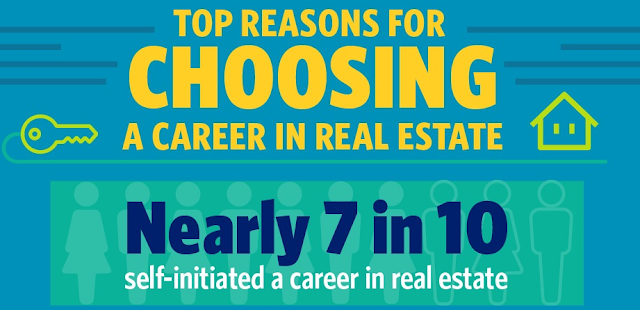
Every REALTOR(R) has a back-story on their path to real estate-and according to new research out of the National Association of REALTORS(R) (NAR), most REALTORS(R) were self-motivated to pursue it as a profession. Seventy percent of REALTORS(R) self-started their career because of an interest in the industry, the "Choosing a Career in Real Estate: A Perspective on Gender, Race and Ethnicity" report reveals. Sixty-four percent, in fact, say their interest in real estate is the most attractive part of the business to them.

Comprised of findings from a survey of 6,363 members of NAR, the report shows 69 percent of male REALTORS(R) and 65 percent of female REALTORS(R) embarked on a career in real estate that was self-motivated. African American and Black REALTORS(R), markedly, represent the largest share of self-motivated starts, at 75 percent.

Some REALTORS(R) entered the industry because of a friend who referred them, the report shows. Broken down by gender, a friend encouraged 20 percent of female REALTORS(R) and 18 percent of male REALTORS(R) to join the profession. Twenty-seven percent of Asian and Pacific Islander REALTORS(R) were referred by a friend-also the majority share.

Confirmed in the research? REALTORS(R) come from all walks of life. Eighty-two percent got their start in the working world outside of real estate; for 51 percent of female REALTORS(R), real estate is their second career, and for 36 percent of male REALTORS(R), their third. Female REALTORS(R) are more likely to come from a career in education, management or office support, while male REALTORS(R) are more likely to come from a career in management or sales. Sixty-one percent of African American and Black REALTORS(R)-again, the majority share-are in their second career.

Looking at activity and production, Caucasian and White REALTORS(R) (who make up 82 percent of NAR members) have the highest sales volume and transactions of all groups, the report shows. Asian and Pacific Islander REALTORS(R), however, sell the most expensive homes-translating to the highest median gross income ($56,800) of all segments. Caucasian and White REALTORS(R) have a median gross income of $54,200.

Hispanic and Latino REALTORS(R), by comparison, have a median gross income of $41,700 and the second-highest median transactions, and sell the third-most expensive homes. They are also the largest group with less than one year of experience in the field, and the largest segment specializing in the residential sector (71 percent).

In contrast, African American and Black REALTORS(R) sell the least expensive homes and have the lowest median gross income ($23,000). They are also the majority group earning less than half their income from real estate, and working less than 20 hours each week, suggesting part-time status as a REALTOR(R).

Turning to gender, male REALTORS(R) have a median gross income of $54,600, while female REALTORS(R) have a median gross income of $46,700. Male REALTORS(R), however, have a median seven transactions; females, a median eight.

Diversity in the field is reflected in its practitioners, but many REALTORS(R) share similar views, the report shows. Eighty-six percent of REALTORS(R) agree "people skills" are crucial to residential real estate success. Other important talents: self-motivation (84 percent) and negotiation skills (73 percent). When asked what are the most attractive aspects of the profession, "flexible hours," "working with people," the "entrepreneurial" quality of real estate, and "salary possibilities," were common responses.

"A career in real estate offers a work environment and diversity of opportunity that attracts all types of individuals, and the report’s findings are a reflection of that," says NAR President Bill Brown. "That being said, NAR remains committed to ensuring that its membership continues to reflect Americas growing diversity."

NARs diversity initiatives include several programs and resources: the At Home With Diversity (AHWD) certification; the Equal Opportunity and Cultural Diversity Program, which includes education, events, grants and partnerships; and the NAR Diversity Initiative Grant Program.

For more information, please visit www.nar.realtor.


CashBuyersLists.com                                                           Please like, comment and share.  Thank you.

Commercial Real Estate Outlook Remains Strong, Prices at a Standstill

RECBL - Cash Buyers Lists
Commercial Real Estate Outlook Remains Strong, Prices at a Standstill

RECBL - Real Estate News

Commercial prices will plateau and may fall in large markets, but secondary markets will experience sustained demand and stable real estate prices, according to Lawrence Yun, National Association of REALTORS(R) (NAR) chief economist.

During a commercial real estate forecast session at the 2017 REALTORS(R) Conference & Expo, Yun and JLL Chief Economist Ryan Severino both expressed confidence that the commercial sector should remain on an upward trajectory, but buyers and sellers could be at odds over price. "The commercial market should expect a standoff between buyers and sellers over price in the next year, which could lead to fewer transactions.

Buyers cannot offer low cap rates because of rising interest rates, and sellers cite the strong economic climate as a reason for high prices. Furthermore, vacancy is falling, yet construction has been lagging because of worker shortages," Yun said.

Yun went on to say that overall, the market is healthy; commercial property prices rose 90 percent in the last seven years, but recent headwinds are developing some ambiguity.

"The economy is quite impressive and gross domestic product [GDP] has grown 3 percent in the last quarter, despite hurricanes and other economic factors," Yun said. "The consumer confidence index is also growing, and the nations net worth and consumer spending are at historic levels."

Yun expects GDP to come in around 2.2 percent for the year and to expand to 2.8 percent overall in 2018, as long as job growth remains solid and construction picks up in both residential and commercial sectors. National office vacancy rates are forecast to remain fixed over the coming year, with rent rising at 2.5 percent per year. The vacancy rate for industrial and retail space are expected to also remain stable, with rent rising slowly at 4 percent and 2 percent, respectively.

Even as new apartment completions bring more supply to markets, the multifamily sector will likely see a vacancy rate remain steady, with rent rising slowly at 3 percent per year. Supported by the ongoing stretch of outstanding job creation since 2010, commercial real estate and vacancy rates, in particular, are expected to be stable across the country. Warehouse vacancy will continue to decrease because of a strong appetite for industrial space, specifically ecommerce and trade.

Yun went on to say that high-tech company expansions, such as Amazon, will have a large effect on regions across the country.

"Depending on where these secondary headquarters land, nearby property owners will experience robust growth and property prices, but renters will indirectly feel a pinch of much higher rent payments," Yun said. Severino joined Yun onstage and delved into the global economy and the performance of major property types.

"Global economic growth is accelerating, and 2018 sees the world’s economic trains running strongly together. Interest rates are also going up but remain low by historic standards," Severino said. Severino anticipates a strong performance from all sectors of commercial real estate, with supply starting to catch up with demand.

"It is important to note that commercial practitioners may be getting too comfortable with the large demand for construction and the great performance of the industrial sector. Furthermore, the suburban market is seeing more activity compared to downtown," Severino said.

Yun also highlighted the current tax reform plan in front of Congress and the impact it may have on the commercial market.

"The industry holds the 1031 like-kind exchange sacred and, currently, it is included in the tax code plan for commercial real estate. This is great news for commercial practitioners and for the industry at large," Yun said.

For more information, please visit www.nar.realtor/commercial.


CashBuyersLists.com                                                 Please like, comment and share.  Thank you.

Tuesday, October 31, 2017

Why You Should Never Skip Out on Lead Generation

RECBL - Cash Buyers Lists
Why You Should Never Skip Out on Lead Generation

RECBL - Real Estate News

The real estate industry is full of peaks and valleys. For many agents, these peaks and valleys are often reflected in their incomes, making it difficult for them to build profitable, successful businesses.

Almost all agents find themselves facing one or more of the common challenges of the business, which include inconsistent income, difficulty generating high-quality leads, weathering the emotional highs and lows, lack of structure and inability to stand out among the competition.

If you’re stuck in the cycle of peaks and valleys, there’s one thing that can help you break out: having a system. When you have a system to follow, you have the tools and strategies you need to stay focused and on track to build your business. The right system not only helps you earn more; it’ll help you save time and create consistency and predictability in your business. While the market may experience peaks and valleys, your business doesn’t have to.

Target Market Your Database
The most effective way to build your business is to tap into your existing relationships and ask for referrals. Working by referral allows you to target market your database, nurturing your relationships through consistent contact and providing your clients with valuable information and insight, as well as a high-level of service. When you talk to them, listen for a need you can meet and act on it right away. If your client mentions they’re thinking of replacing the roof on their home, connect them with reputable roofers in your network. Or, if they mention they’re thinking of starting a business, give them a book from your favorite business leaders to help them keep their motivation high. These seemingly small gestures have a big impact and help to build your relationship.

A benefit of building your database with people you enjoy working with is it helps you better manage your time and prioritize your day. You won’t waste time dreading an upcoming interaction with a mean or overly-demanding client; instead, you’ll do your proactive lead-generating activities with a smile on your face. Boost the effectiveness of your interactions by tracking your activities and results; that way, you can see where you stand in your business, tap into more opportunities to connect with your clients and fill your pipeline with a steady stream of leads.

Once you’ve developed a relationship with your clients-whether you’re currently working with them or you helped them buy or sell a home a few years ago-ask them for referrals to other great clients like them. Most people will be eager to refer you to their friends, family and co-workers, if asked. Since "birds of a feather flock together," asking your best clients for referrals helps you ensure youll continue to build a database of great people you enjoy working with.

Lead-Generating Habits Necessary to Success
If you want to succeed, be sure to cultivate these habits. They’re imperative to developing a lucrative and predictable business.

1. Commit to two hours of proactive lead generation activities each day. This includes calling your clients to check in, writing personal notes to thank clients for their business or delivering small gifts of appreciation to your client’s homes or offices.

2. Mail an item of value each month to help you reinforce your character and competence as an agent. While these marketing pieces don’t necessarily have to discuss real estate each time, they should cover a topic of interest to your clients, whether they’re current or aspiring homeowners.

3. Always follow up with a phone call after you’ve sent your marketing piece to see how they’re doing and ask if there’s anything you can do to help. This is the best time to listen for a need you can fill, so listen closely.

4. Send a personal note after you speak with your client on the phone to express how much you enjoyed catching up with them.

5. For your best clients, deliver a small gift of appreciation to their home or office to further build the relationship.

Don’t forget to ask for a referral each time you speak with your clients. A gentle reminder will help them remember to refer you when a family member, friend or co-worker mentions they’re thinking of buying or selling a home. If you’re not sure how to ask, we’ve created a resource to help you start the conversation.

For more information, please visit www.buffiniandcompany.com.


CashBuyersLists.com                                                       Please like, comment and share.  Thank you.

Thursday, October 26, 2017

It's Time to Get Your Home Inspected

RECBL - Cash Buyers Lists
It's Time to Get Your Home Inspected

RECBL - Real Estate News

(TNS)-Buying a house can be difficult enough-especially in today’s market. Even after a seller accepts an offer, the sale is not a done deal until certain "contingencies" are met. Some are straightforward: Some buyers stipulate, for example, that a sale cannot proceed until they sell their current home. Other contingencies are more complicated. Either way, all are in place to protect buyers and sellers, allowing either to walk away from a deal if their conditions are not met.

Navigating these contract conditions can be confusing, and in today’s hot real estate market in which some buyers are waiving contingencies in order to win bidding wars, it can be difficult to determine which are important.

These days, real estate agents say they have seen buyers waive inspection contingencies to make their offers more attractive. In doing so, buyers are forgoing their rights to an independent inspection, meaning they cannot ask the seller for repairs or walk away from a property if it turns out to be unsatisfactory. In short, buyers are accepting a house as is-and potentially, all of its hidden problems.

To help buyers decide how important independent inspections are, we spoke to real estate agents and inspectors about what goes into a home inspection, and whether waiving that condition is a good idea.

What exactly is a home inspection?
In most typical real estate transactions, a home inspection is the next step that occurs after a bid is accepted. Buyers are responsible for hiring the inspector before the deal closes, and the process is in place to protect them.

The inspector’s job is to examine a home, determining whether there are problems with its exterior or interiors, from the foundation to the roof. The inspector provides a report to a buyer, who can then bring that information to a seller and use it back at the bargaining table.

How quickly do I have to schedule one?
"It depends on the contract and the state you’re in," says Frank Lesh, executive director of the American Society of Home Inspectors. But typically, he adds, buyers have five to 10 days after a home goes under contract.

Lesh’s advice: Once a home is under contract, contact an inspector immediately.

"Inspectors are busy, especially in hot markets," he says. "Some people tend to forget and wait until the last minute. You really only have a few days."

How can I find a well-respected home inspector?
Regulations for home inspectors differ across the United States. In New Jersey, for instance, inspectors are licensed and regulated by the states Home Inspection Advisory Committee. To become certified, inspectors must, by law, complete 180 hours of study courses, including 40 hours of unpaid field work in the presence of a licensed inspector. Each inspector must pass a national exam, and complete continuing education every other year.

In Pennsylvania, by contrast, home inspectors are not regulated by the state, and instead are required to be a "member in good standing of a national home inspection association," such as the American Society of Home Inspectors (ASHI) or the International Association of Certified Home Inspectors (interNACHI). Each association has its own requirements on certification and continuing education; for example, ASHI requires inspectors to pass the national exam and to complete 250 inspections to become certified. Continuing education is also required.

What does my home inspection cover?
A general home inspection is a noninvasive exam of a sellers home. "The standards of practice are pretty uniform," says Pete Ciliberto, owner and chief inspector of Real Estate Inspections, an inspection group. "We are covering all the major components and systems of a house-all of the structural elements, the foundation, exposed framing," and more.

What that means: A general inspector will inspect the general structure of the roof, and the gutters and downspouts around it. He or she will make sure the homes "flashing"-the thin layer of waterproof material that prevents water from getting into where it does not belong-is correct. The heating and air conditioning systems are also inspected to ensure they are up to snuff. So are ceilings and floors, chimneys and vents. The ventilation of attics is inspected, and a generalized overview of electrical systems is completed.

"There are probably over 200 things that we inspect," Lesh says.

What does it not include?
Many things are not included, inspectors say. An inspection is not technically exhaustive, they pointed out, nor does it determine a property’s suitability. Inspectors are not required to determine whether a building is up to code, and they are not required to move furniture, enter crawlspaces, or offer any services besides the inspection.

Most important, the experts said, inspectors are not required to determine the presence of rodents or pests. They are not required to assess air quality or test for mold, mildew or fungus. Airborne and environmental hazards are also excluded, meaning radon, lead paint and asbestos tests are not conducted in a general inspection.

However, buyers can bring in specialists if they have particular concerns-or hire a general inspector who may be trained in a specialized area.

"There are guys who do mold testing, air sampling, and other ancillary services," Lesh says. "If you want one person to take care of the whole thing, you can (find someone) to do that."

Why should I get one-and should I waive that contingency?
When making a financial decision as significant as purchasing a home, you want to confirm that you are making a wise investment. While inspections are not holistic, they offer a snapshot of a home’s condition, and can give you fair warning of what repairs may be needed now or in the near future. Plus, agents point out, after an inspection report is issued, a buyer can use the report to ask a seller for repairs-or can walk away entirely.

"They can ask for anything they want or can terminate for any reason-they do not have to say why," says Mike McCann, a real estate agent in the Mid-Atlantic region. "The fall-through rate is only about 10 to 15 percent of the time, but I will tell you now, over 90 percent of the time, concessions are made after the inspections."

McCann says he advises clients to never waive the inspection.

"If they don’t own the home, there are many things about it that they don’t know yet. You can’t check the roof. You can’t see every joist. Having a professional go through that is very important."

(C)2017 The Philadelphia Inquirer
Distributed by Tribune Content Agency, LLC


CashBuyersLists.com                                                     Please like, comment and share.  Thank you.

Monday, October 2, 2017

How to Attract Millennial Homebuyers

RECBL - Cash Buyers Lists
How to Attract Millennial Homebuyers

RECBL - Real Estate News

Millennials are getting the brunt of the blame for killing many industries that were supported by previous generations but, as it turns out, the real estate industry is alive and well.

Understanding what millennials are looking for in a potential home is imperative if you want to succeed as a real estate professional, as more millennials are starting to search for their first home. Taking certain actions can give you an edge in attracting the millennial market.

Highlight the Flexibility of Open Spaces
If millennials are one thing, its indecisive. They’ve grown up with the idea that they can go anywhere and do anything. The trouble is that they want it all and can be fickle about where to settle. They may enter the home-buying market several times before they seal the deal. What if there’s a career change? Are kids in the future or not? Maybe the contract job (and the regular income) will dry up. To close the deal with a millennial buyer, you have to show off, for example, how the spare room can be used either as an office or as a nursery. It can even be used to generate income by renting it out on space-sharing apps or to a regular renter.

Sell the Potential of Genuine Fixer-Uppers

Saddled with debt and settled in lower-paying jobs, most millennials can’t afford much more than a small, basic house. They understand that there is a potential value in a bigger home in questionable condition, though. Armed with confidence and education (and home-flipping reruns on TV), they are often open to investing in fixer-uppers. In a market where another agent is a text message away from a skeptical millennial, don’t lose the trust of a potential buyer by trying to sell a lemon.

Balance Eco-Friendly Features With Home Automation
If you want to catch the attention of the growing millennial market, showcase how eco-friendly and smart the property is (or can be)! Be sure that a high-speed internet connection is available; if not, research an alternative. Exchange appliances that are not energy-efficient for ones with smart features. Being green is just as important, so consider advising the seller to invest in solar panels. Also, be ready to show off the outdoor living and gardening space.

Voice-recognized smart home devices from major tech companies are taking over home features. Demonstrate ways that the home can be fully automated with the right products and efforts. Consider featuring safety devices like security cameras or doorbell cameras that are tied into a smartphone app. Smart thermostats are becoming the norm as well, even in rented spaces.

Focus on the Convenience of the Location
The character of the home and neighborhood matters to millennials, so point them to quaint communities, local small businesses, and art districts. They tend to work outside of the formerly typical nine-to-five, so routine meals go by the wayside. Proximity to restaurants and delivery options is important. Also, many millennials enjoy non-motor transportation, as well, so distance from work hubs matters.

Since they also need to be able to afford it, a home in the suburbs may be necessary. If a home is located where a commute would be a necessity, be ready to provide travel times, fastest routes, and multitasking ideas like listening to podcasts or staying current on the latest news on NPR.

Assure the Simplicity of It All
Millennials pride themselves in not wanting to "adult." Growing up, they weren’t involved in home projects outside of routine chores and many are often not concerned with home skills that were once considered common. Draw millennials in with properties that come with amenities such as lawn maintenance or consolidated billing, but do avoid demanding homeowners associations. Update exterior features that require regular maintenance (a shingle roof to a metal roof, for example).

Prepare your buyers with the knowledge that will give them the confidence to close. Have a website or print-out of information that will let them know what to expect in terms of processes and costs of services related to purchasing a home. Millennials will close much more readily when they understand the system.


CashBuyersLists.com                                                                                   Please like, comment and share.  Thank you.

Friday, September 29, 2017

Home Sellers Are Making Bank in Today's Market

RECBL - Cash Buyers Lists
Home Sellers Are Making Bank in Today's Market

RECBL - Real Estate News

Home sellers are making bank in today’s market, realizing a 24.1 percent, or $39,900, gain in 2016, according to a recent analysis by Zillow.

Sellers on the West Coast - where home prices have rocketed since the recession - saw higher returns, with those in Oakland, Calif., taking home the most at 78 percent, or $235,000.

Duration is key. The average seller turning a $39,900 profit, the analysis shows, held on to their home for seven years and five months. The average seller in Oakland hung on to their home for seven years and three months.

The top 10 markets


"The housing market can change a lot in 10 years, and you see that reflected in the top 10 list," says Dr. Svenja Gudell, chief economist at Zillow. "Buying a home is one of the biggest financial decisions people will make in their lifetime, and it really paid off for sellers in these cities. Every city on this list has been growing extremely fast over the past decade, with the majority passing peak home value hit during the housing bubble."

The ability to amass wealth over the long term makes real estate the No. 1 investment for most Americans, despite proven results from stocks and other vehicles.

"It’s extremely difficult to time the market, but if you’re a longtime homeowner in one of these cities, you could potentially see a great return on your investment," Gudell says.

For more information, please visit www.zillow.com.


CashBuyersLists.com                                                                                   Please like, comment and share.  Thank you.

Monday, September 25, 2017

Boom, Baby Boomers, BOOM! One of America's Most Lucrative Demographics

RECBL - Cash Buyers Lists
Boom Baby Boomers, BOOM! One of America's Most Lucrative Demographics


With more than 75 million people fitting into the American baby boomer demographic, it is easy to understand why this group would be important for REALTORS(R) to understand.

Even more eye-popping to REALTORS(R) is the fact that more than 70 percent of baby boomers own homes, and will be looking to make homeownership changes really soon. This spells big opportunities for REALTORS(R) looking to serve the burgeoning baby boomer market over the next 10-15 years.

NAR takes a deep dive into marketing to baby boomers in its Field Guide to Working With Baby Boomers, which features, among many others, an article from Forbes Magazine entitled "7 Reasons Why Marketing to Baby Boomers Is Unique," which includes the following insights:
1. Baby boomers have money to spend. As opposed to those who grew up in the Great Depression, baby boomers are quite affluent. According to a Nielsen report, they account for $230 billion in sales of consumer-packaged goods like coffee, diet soda and magazines, and make up 70 percent of the nations disposable income. Baby boomers will also inherit $13 trillion in the next 20 years.

2. Baby boomers invented the suburbs. Suburban home development occurred simultaneously with baby boomers ability to make down payments on a mortgage and their desire to leave urban marketplaces. They still live in the suburbs, where many now own 100 percent of their own homes.

3. They plan on living in a better house as they grow older. Seventy percent of baby boomers think their current house is not the best that they can get and they are looking to upgrade. Baby boomers are setting new trends that defy traditional definitions of a "relaxed" retirement. Instead, they are diligently looking for newly constructed homes where they can continue to pursue an active lifestyle surrounded by the latest amenities.

4. Their brand loyalty is tenacious. Once they find a brand they like-one they grew up with-they stick with it; Volkswagen cars, Levi jeans, Harley Davidson motorcycles, Club Med, Noxzema, Leggs. This means that finding out what your baby boomer clients interests are will help guide you toward homes that best meet these trends, and, ultimately, increase the chances of closing a deal.

5. Remembering Woodstock - The famous music festival was a countercultural event which symbolized that the baby boomers were not going to be defined by their parent’s morals and lifestyle. They were going to think and act for they themselves-and they still want to be thought of that way. The least hint of patronizing the baby boomers will flatten any marketing campaign.

6. Baby boomers do use social media, but in a different way. As you develop your social media strategy for baby boomers, be aware that while a 20-year-old is posting photos of their night out on Instagram or Snapchat, a baby boomer is more likely to post a photograph of a new grandbaby or the new RV they just purchased on Facebook. It’s the more "traditional" venues, such as Facebook and Twitter, that are used by baby boomers, so keep your focus there.

7. Baby boomers are not old. Baby boomers do not want to be reminded of their age or be considered as old; rather, they want to be encouraged about their accomplishments and their future. They want to hear about the opportunities that lay before them to experience new chapters in their life.

Other helpful articles in the field guide include "Myths About Boomers and Real Estate," "9 Digital Marketing Strategies to Woo Baby Boomers," and "Baby Boomers Not Showing Any Signs of Downsizing." In addition to marketing resources for the baby boomer market, the field guide also provides tips on reverse mortgage basics, housing trends for the 50+ demographic, related websites relevant to this audience and links to eBooks and other resources.

View the entire Field Guide to Working With Baby Boomers resource from NAR.

To learn much more about how real estate professionals can best serve baby boomers and other 50+ client segments, please consider checking out the education, benefits, and resources offered by SRES(R) Designation. This entire month of September, the featured 25% OFF course at the Center for REALTOR(R) Development is the Seniors Real Estate Specialist (SRES(R)) Designationcourse, which is the basic requirement toward obtaining the SRES(R) Designation.

A version of this article originally appeared on NARs The Members Edge blog. The Members Edge is a blog for new members to learn all about the benefits provided by the National Association of REALTORS(R) (NAR). It is the go-to resource for everything from real estate ethics to tips for interacting with foreign buyers. The information provided in The Members Edge cultivates a capable and educated community of REALTORS(R).

For more information, please visit onlinelearning.realtor.


CashBuyersLists.com                                                                             Please like, comment and share.  Thank you.
Monday, September 18, 2017

10 Ways to Build Long-Term Client Relationships

RECBL - Cash Buyers Lists
10 Ways to Build Long-Term Client Relationships

RECBL - Real Estate News

Successful real estate professionals know the importance of building the kind of long-term client relationships that lead to repeat and referral business.

In addition to bringing in more listings and closings, long-term client relationships can be personally rewarding and fulfilling. Here are 10 ways to help build lasting real estate connections:

1. 'Go The Extra Mile': To build a strong relationship foundation, always strive to exceed your client's expectations. Providing 'service excellence' means cheerfully and routinely going above and beyond your role as a real estate professional. Clients will remember your efforts and want to do business with you again.

2. Pay attention to details. Remember if a client said they like hardwood floors, or if a short work commute is important to them. Pick up the newspaper from the driveway or bring in the mail when you visit their home. Remember pets’ names, and show a sincere interest in their family. Noticing the small things will signal to clients that you want to build a relationship with them.

3. Share your expertise. Clients look to you for expert real estate advice, and they depend on you for guidance. Don’t assume they already know everything about real estate transactions. Encourage them to ask questions at every step along the way, and be ready to provide accurate, succinct, and honest answers. Stay up-to-date on industry news and trends, as well as community and neighborhood issues and information.

4. Be available. Return calls and messages promptly, and plan your schedule around theirs as much as possible. Encourage them to contact you anytime if they have any questions or concerns.

5. Communicate, communicate, communicate! Touch base frequently with clients, even if you don’t have any news or updates. You never want clients to feel that you’ve forgotten about them, or that they aren’t a top priority for you. Always let them know what steps you are taking on their behalf, or what plans you have.

6. Help clients set realistic expectations. If you don’t think you can get a certain asking price for a listing or find a suitable new home for your clients within a certain period of time, say so. It’s better to set attainable goals on the front end than to fall short and disappoint clients down the road.

7. Service Provider Standards: Choose service providers who reflect your professional and service standards. Clients will likely see service providers as an extension of you, so make sure to align yourself with dependable, reliable, and reputable people and companies.

8. Ask for the business. Tell your clients that you want to work with them again, and that you’d like to serve their family and friends, too. Give them some of your business cards and marketing materials to share.

9. Show clients you care about them even after the deal closes. One way you can do this is by offering home warranty coverage. A home warranty can help enhance relationships through smoother transactions, comprehensive coverage, and service excellence and value that continues long after the transaction is done. New homeowners appreciate the protection and reassurance that a home warranty brings, which strengthens their relationship with you.

10. Stay in touch. In addition to holiday messages and sharing industry news, make sure to drop a personal note or email to past clients periodically. Better yet, drop by and see them in person when time permits. Let them know that you consider them to be friends as well as clients.

Source: HSA Home Warranty


CashBuyersLists.com                                                                                  Please like, comment and share.  Thank you.

WHY USE PRIVATE MONEY LENDERS?

  WHY USE PRIVATE MONEY LENDERS? 1. Private lenders for real estate are offering competitive interest rates Since a loan on an investment pr...